

A leading environmental solution provider
Get in touch with us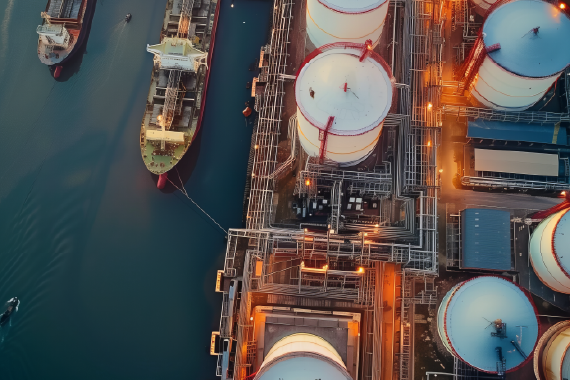
‘Fit for 55’ is the European legislative framework requiring greenhouse gas emissions to be reduced by at least 55% by 2030 compared with 1990 levels. This target lies at the heart of the most extensive restructuring of the European energy market currently under way. To achieve it, Europe has for years relied on a market-based mechanism: the Emissions Trading System (ETS). Under this system, companies must purchase an allowance for every tonne of CO₂ they emit. Until now, ETS-1 has applied mainly to heavy industry and the power sector. More recently, a more direct variant has been introduced: ETS-2.
The ETS-2 system does not spare consumers or the transport sector. The mechanism is based on the polluter-pays principle. From January 2028, fuel suppliers will have to pay for the CO₂ emissions associated with the petrol, diesel and gas they place on the market. This is expected to increase prices at the pump by around €0.15 per litre.
The Dutch market has already undergone significant changes in recent years due to the tightened blending obligation and the transition from HBEs (Renewable Fuel Units) to EREs (Emission Reduction Units). However, the forthcoming ETS-2 obligation will transform the market completely. This article examines these market shifts, analyses where the pressure points lie within the supply chain and considers how neighbouring Germany is addressing them.
The Netherlands is a major international hub for fuel transport and storage. The Port of Rotterdam and the country’s strategic location have attracted several large refineries, a substantial share of whose production is destined for export. Although the Netherlands is home to one of the world’s largest bunkering markets, its domestic fuel consumption is relatively small.
The ETS-2 obligation does not fall on the individual motorist, but on the party that releases the fuel for free circulation, known as the release for consumption. In practice, this is the point at which the fuel leaves an excise goods warehouse (Accijnsgoederenplaats, or AGP) or depot.
The Netherlands currently has only 33 AGPs for petrol and diesel, more than half of which are controlled by just four companies. Relative to the total volume of fuel released for consumption, the Netherlands has very few AGP locations. This makes the Dutch supply chain vulnerable. Because there are so few locations, control over the entire chain rests with a small group of market participants. Smaller, independent fuel suppliers often do not operate a physical AGP and are therefore completely dependent on the infrastructure and administrative systems of these larger players.
To understand the vulnerability of the Dutch situation, it is useful to look at Germany. The German fuel market is not only enormous but also highly decentralised, with a network of hundreds of regional AGPs and depots. A medium-sized German fuel distributor can easily operate 33 AGPs in its own name—as many as the whole of the Netherlands. If one operator imposes excessive administrative costs, a trader can readily move to another AGP to release its fuel for consumption. That competitive flexibility is absent in the Netherlands.
The most significant shift, however, will occur in the trading structure. A substantial part of the Dutch market has traditionally operated through so-called ABC supply arrangements. Under this model, party A, the AGP holder, sells to intermediary B, which immediately resells the product to party C, the independent petrol station. The fuel is transported physically and directly from A to C, while B and C exchange only paperwork and commercial margins.
The introduction of ETS-2 creates a strict requirement for physical evidence throughout the sustainability chain, or mass balance, at the precise moment the fuel is physically released from the depot. Because intermediaries such as B and buyers such as C trade only on paper and have no physical control over party A’s AGP, it is almost impossible for them to provide this evidence. If the evidence is missing, the Dutch Emissions Authority (NEa) classifies the entire volume as 100% fossil. This immediately creates a substantial and costly obligation to purchase ETS-2 allowances.
As a result, much of the market’s flexibility will disappear. Intermediaries will be pushed out, and petrol stations will be forced to purchase fuel directly from the AGP holder, with excise duty, ETS-2 costs and blending already included. The biofuel blending obligation will therefore also rest exclusively with the AGP holder, narrowing the ERE market to this small group of obligated parties.
Germany applies more flexible rules to reliable market participants. Once a trader has demonstrated that it is financially sound, bank guarantees can be partially or fully waived, leaving considerably more working capital available within the business. Germany also benefits from having many physical storage locations because of its geographical size. Where economically justified, the German authorities therefore take a flexible approach to granting AGP permits for small regional storage sites. This decentralised policy and dense infrastructure leave Germany better equipped to absorb the economic side effects of ETS-2.
The Netherlands, by contrast, applies a very strict policy when issuing AGP permits. The Dutch authorities currently require a high bank guarantee to cover the risk of unpaid excise duties, a financial burden that is often beyond the reach of smaller businesses. Dutch Customs could lower the threshold for obtaining an AGP permit, making it easier for smaller independent companies to operate their own AGP. This would increase market flexibility and directly reduce dependence on the large depot owners.


